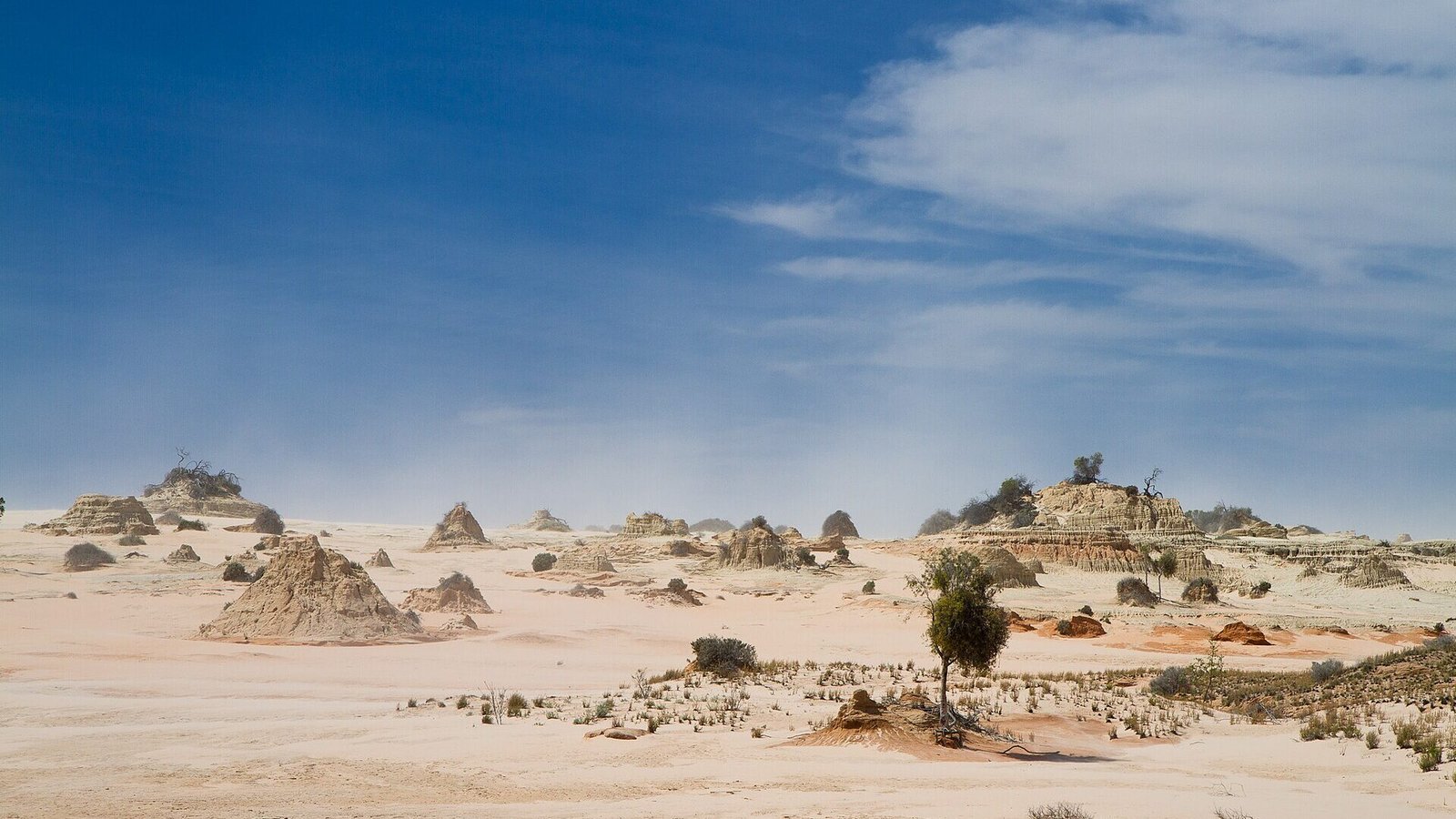
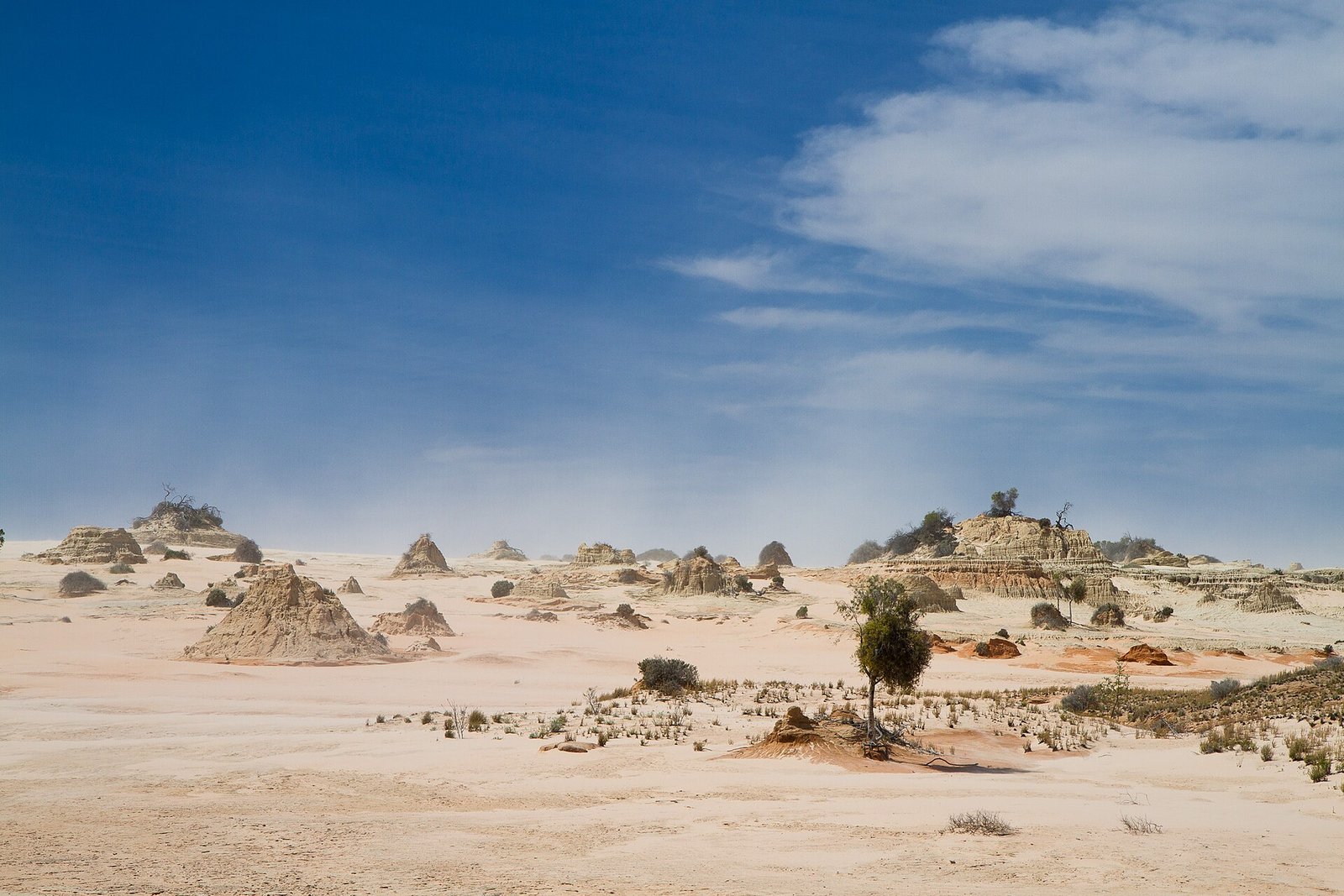
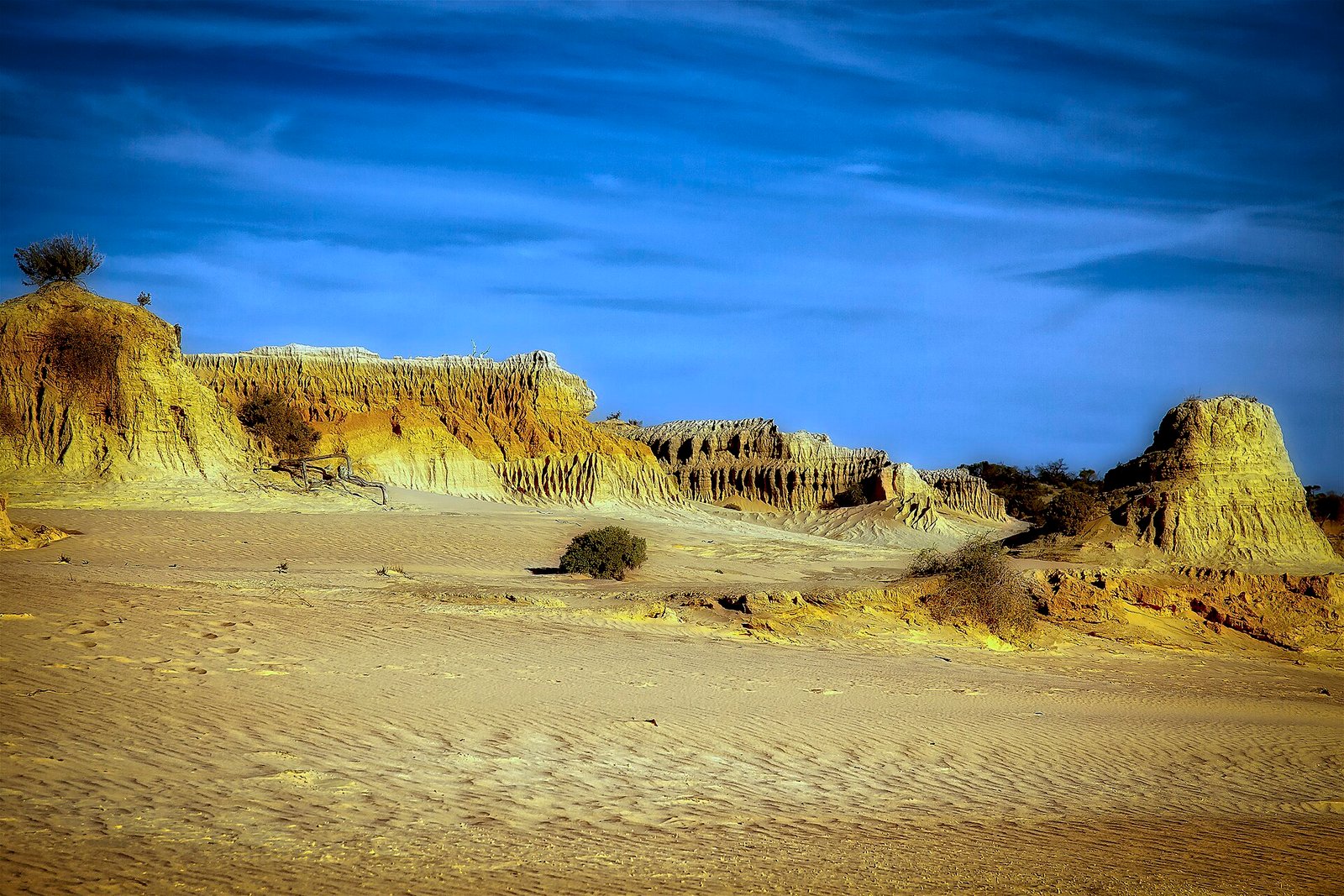
Wind-carved lunette dunes glowing gold and rust at sunset in World Heritage Mungo country — the most otherworldly landscape in NSW.
Family
The Walls of China are a 33 km crescent of wind-sculpted sand and clay lunettes rimming the dry bed of Lake Mungo, deep in outback NSW. At sunset the formations ignite in gold, rust and bone-white — a landscape so otherworldly it barely reads as Australian. This is also profoundly significant country: the remains of Mungo Lady and Mungo Man, evidence of more than 40,000 years of human life, were found in these dunes.
Photographing the Walls
A viewing platform near the road is open to all visitors any time — sunset from here is superb. Walking among the formations themselves is only permitted on an Aboriginal Discovery guided tour, which is worth booking for both access and the story of this World Heritage place.
Planning an outback trip
Mungo is remote: 110 km of mostly unsealed road from either Mildura or Balranald, impassable after rain. Carry water and fuel, and stay at Mungo Lodge or the park campground to be in position for golden hour. Pair it with an outback road trip loop — one of the great photography pilgrimages in NSW, and check more national parks.
🏅 Own or manage this place? Get your “Featured on AustralianSecret” badge
Show visitors you're featured in our independent directory — copy this snippet into your website. The badge links back to your listing here.
Watch
Photo Gallery
Facilities
Visitor centre, campground and Mungo Lodge near the park entrance; no water at the Walls
Photography Tips
Sunset side-light carves out every rill in the lunettes; stay 30 minutes after sundown for pink afterglow. A telephoto isolates abstract patterns.
Insider Tips
Roads are unsealed and close after rain — check conditions with NPWS. Book the guided tour to walk among the formations; the platform is self-guided.
Getting There
About 110 km on unsealed roads from Mildura or Balranald (allow 90 minutes). Park entry fee applies; 2WD fine in dry conditions.
Frequently Asked Questions
Can you walk on the Walls of China?
Only on an Aboriginal Discovery guided tour, which protects the fragile dunes and their archaeology. The viewing platform is open to everyone at any time.
Why is Mungo National Park famous?
Its lunettes preserved Mungo Lady and Mungo Man — evidence of ritual human burial over 40,000 years ago — making it one of the world's great archaeological sites.
When is the best time to photograph the Walls of China?
The hour around sunset, when low light sets the gold and rust formations glowing. Cooler months (April–October) are best for travel.
Do you need a 4WD for Mungo National Park?
No — in dry weather the unsealed roads suit careful 2WD driving, but they close after rain, so always check conditions first.