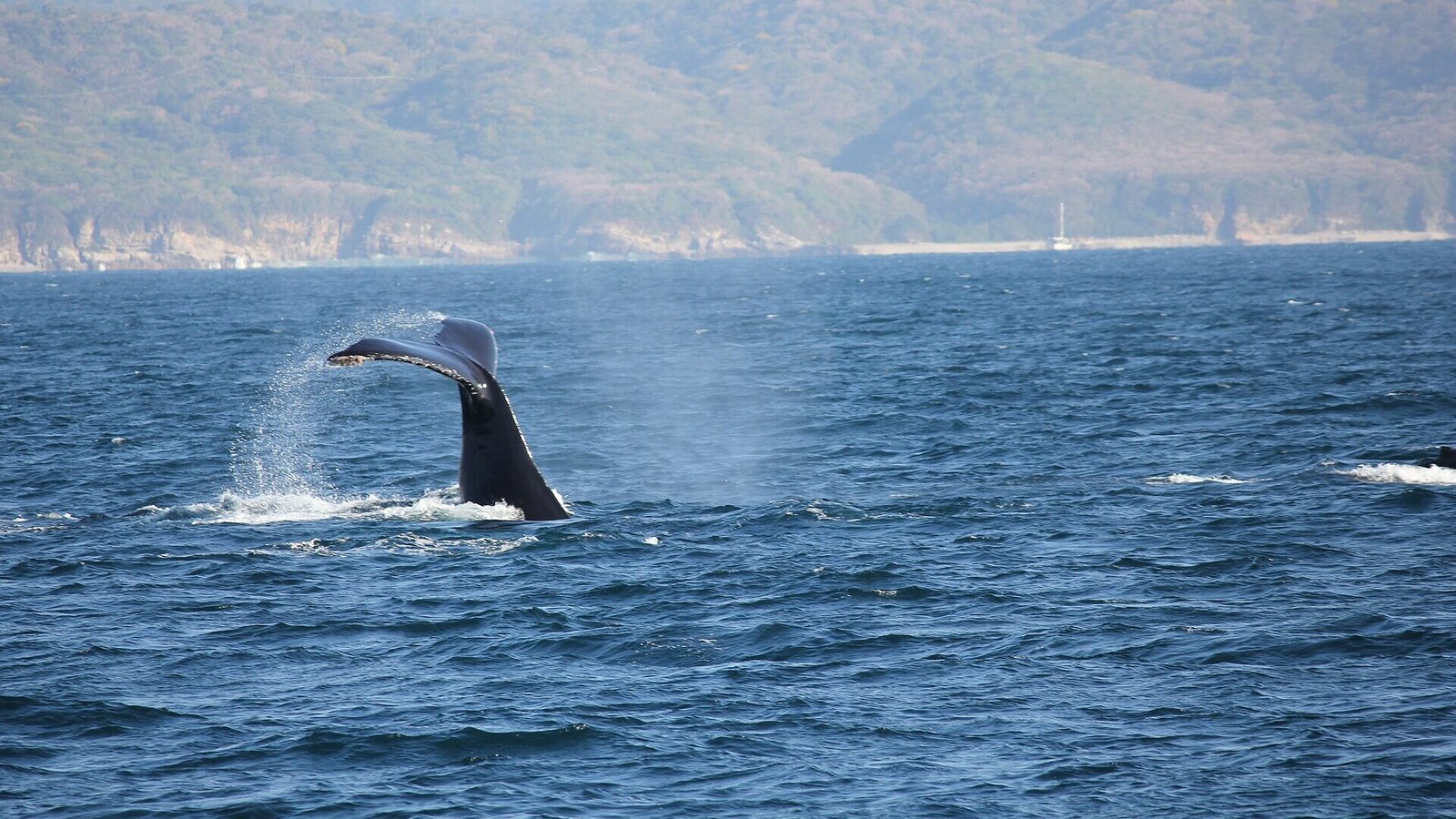
You don’t need a boat ticket to see whales off the NSW coast. Every year, humpback whales migrate along the coastline — north from roughly May to July, then back south with calves from September to November — passing close enough to headlands and clifftops that a good pair of binoculars is all you need.
We’ve mapped and verified 10 free, public whale-watching spots across NSW, from the purpose-built platforms at Cape Solander to quiet headlands most tourists miss. Here’s the full list.
Free Whale-Watching Spots in NSW
- Long Reef Point, Collaroy — Long Reef Point sticks well out from the Northern Beaches coastline, putting its headland closer to open water than most beaches nearby — a genuinely useful angle for whale watching, and the walk around the point takes in the Long Reef Aquatic Reserve rock platform as a bonus.
- Malabar Headland National Park — Malabar Headland National Park, on the clifftops between Malabar and La Perouse, is one of Sydney’s newer national parks — former military land now open to walkers, with open heathland tracks running right along the ocean cliffs.
- Garie Head, Royal National Park — Garie Head, above Garie Beach in Royal National Park, gives a wide, unspoiled view down the coast and is far less crowded than the eastern suburbs spots — a good pick if you want whale watching combined with a proper national park day out south of the city.
- Barrenjoey Headland, Palm Beach — Barrenjoey Headland, at the very tip of Palm Beach, is Sydney’s northernmost whale-watching option — a genuine bushwalk up to the 1881 lighthouse rewards you with 360-degree views over both the ocean and Pittwater, making it easy to spot whales on either side.
- Ben Buckler, North Bondi — Ben Buckler is the rocky point at the northern end of Bondi Beach where the Bondi to Bronte coastal walk begins — a genuinely good whale-watching vantage that has the advantage of being walkable straight from Bondi’s cafes, buses and parking.
- Dudley Page Reserve, Dover Heights — Dudley Page Reserve sits on the high sandstone clifftops of Dover Heights, on the same stretch of coast as the historic Macquarie Lighthouse — one of the highest points on Sydney’s eastern clifftops, which makes for a wide, largely uninterrupted ocean view.
- Diamond Bay Reserve, Vaucluse — Diamond Bay Reserve is a quieter alternative to The Gap just a few minutes up the coast — a rugged clifftop reserve with walking tracks along the edge of the headland and far fewer crowds, even in whale season.
- The Gap, Watsons Bay — The Gap is one of Sydney’s most photographed clifftops, and it doubles as a solid, easy-access whale-watching spot — the fenced lookout sits high above open water with an unobstructed view north and east, right in the middle of the historic Watsons Bay village.
- North Head, Manly — North Head, the dramatic headland guarding the entrance to Sydney Harbour, gives some of the highest and widest ocean views in Sydney — which makes it a genuinely good whale-watching spot as well as a lookout, especially from Fairfax Lookout and the old Third Quarantine Ground cliffs.
- Cape Solander, Kurnell — Cape Solander, inside Kamay Botany Bay National Park at Kurnell, is Sydney’s best-known dedicated whale-watching spot — the NSW Government even installed purpose-built viewing platforms here because so many humpbacks pass close to the headland on their annual migration.
Tips for Whale Watching from Land
- Bring binoculars — even the closest headlands put you hundreds of metres from the water
- Overcast days with calm seas are often better for spotting blows and splashes than bright glare
- The southern migration (September–November) tends to bring whales closer to shore, since mothers with calves often hug the coast
- Arrive early on weekends — the well-known spots like The Gap and Cape Solander get busy once a sighting is reported
For a deeper look at any of these locations — address, best time to visit, facilities and getting there — click through to the individual guide above.
Frequently Asked Questions
When is whale watching season in NSW?
Roughly May to November, with two peaks: the northern migration in May–July and the southern migration (with calves) in September–November.
What’s the best free whale-watching spot in Sydney?
Cape Solander at Kamay Botany Bay National Park has purpose-built viewing platforms and is considered Sydney’s best dedicated whale-watching location.
Do I need binoculars to see whales from land?
They’re not essential — whales are often visible with the naked eye — but binoculars make a big difference at the distances involved.